
What Is Collaborative Care?
Author: Dr. John Kasawa, MD, Medical Director
Quick answer: Collaborative care is a team-based model in which clinicians from different disciplines share one plan built around the patient's goals. It has strong research support in mental health care inside primary care, and the same principles apply to integrative medicine. Saffron & Sage, an integrative health clinic in San Diego, applies them across its care team.
Key takeaways
Collaborative care means shared goals, shared information, and a plan that is reviewed and adjusted over time.
The formal "Collaborative Care Model" was developed for mental health in primary care and has a strong evidence base.
In everyday practice, the idea is simple: your clinicians talk to each other, so you do not have to relay everything yourself.
What does collaborative care mean?
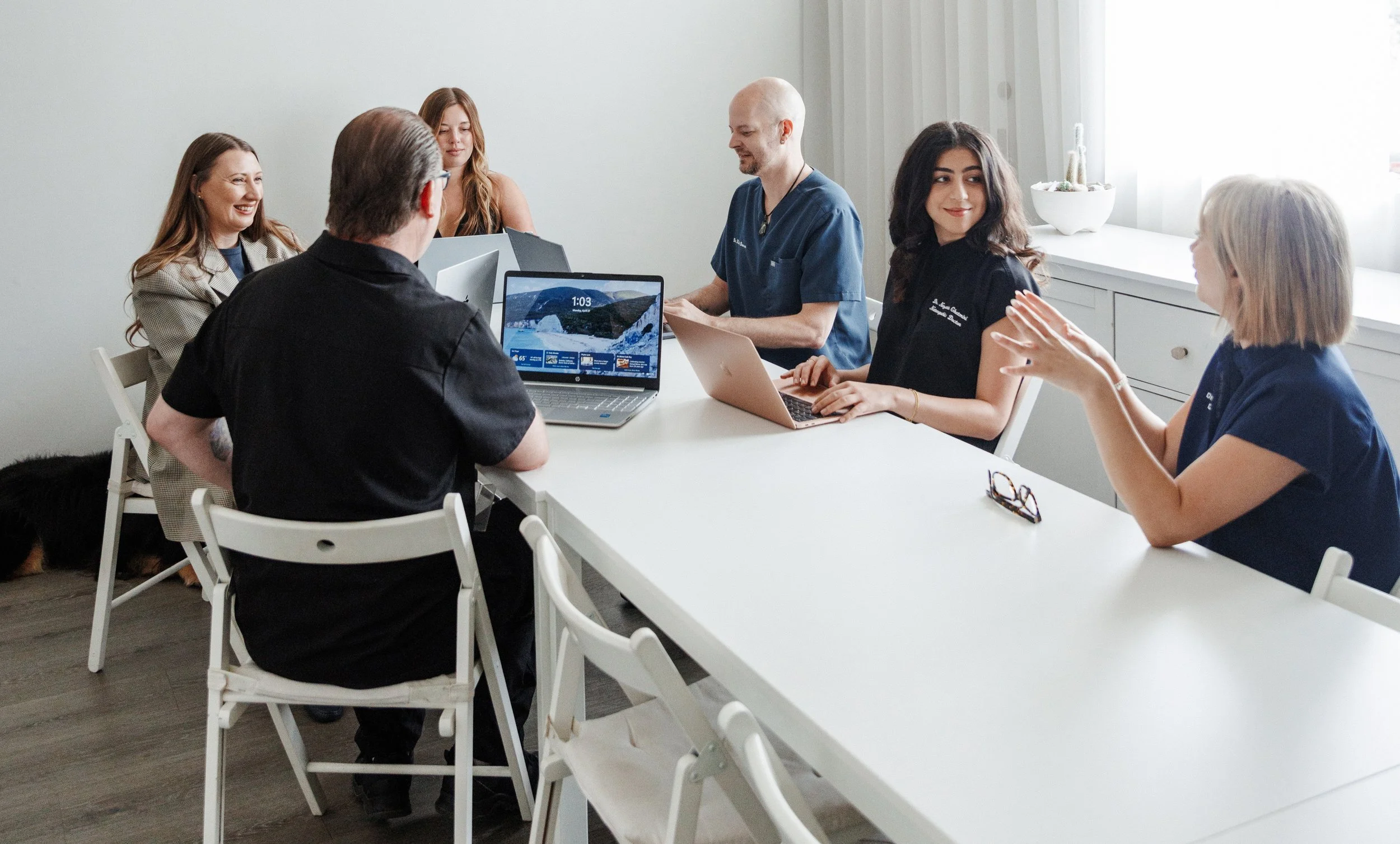
Collaborative care means that clinicians work as a team, not as separate offices. They share a care plan, track progress, and adjust the plan together.
The American Psychiatric Association describes the Collaborative Care Model as a primary care provider leading a team that includes a behavioral health care manager and a psychiatric consultant. Each person works at the top of their training, and the plan follows evidence-based guidelines.
Outside of mental health, the same spirit applies. Collaborative care is less about a specific protocol and more about how information and decisions flow between the people caring for you.
What are the core elements of the model?
The formal model has three core features, according to the American Psychiatric Association:
Team-based care: clinicians share a plan centered on the patient's goals.
Population-based tracking: the team follows a defined group of patients so no one is lost, and reaches out when someone is not improving.
Measurement-based care: goals and clinical targets are tracked with validated tools, and treatment changes if progress stalls.
Those ideas translate well to any setting. Your clinic should know what you are working toward, how progress is measured, and when to change course.
What does the research say?
Research on the formal Collaborative Care Model is strong. The American Psychiatric Association reports that, among integrated care models, it has the most research support, with studies showing better access, clinical outcomes, and patient satisfaction in several settings. Keep in mind that this summary comes from the APA's own framing.
That evidence applies to the formal model for mental health in primary care. It does not mean every team-based clinic gets the same results. Strong communication and clear roles still matter.
How does collaborative care work in integrative medicine?
In an integrative clinic, collaborative care means your Doctors from different disciplines contribute to one plan. A Naturopathic Doctor, a Doctor of Acupuncture and Chinese Medicine, a nurse, and a therapist may each see you, but they work from the same notes and goals.
This helps in practical ways:
You tell your story once, not four times.
Recommendations do not contradict each other.
Someone owns the overall plan and checks that each piece fits.
Progress is reviewed at set intervals, not only when something goes wrong.
Medical oversight is part of the structure. At Saffron & Sage, our Medical Director oversees care across the team.
How can you tell if a clinic is truly collaborative?
A few questions reveal a lot. Ask who coordinates your plan, how clinicians share information, and how often the plan is reviewed.
You can also ask whether the clinic will communicate with your outside Doctors, with your permission. A collaborative clinic will say yes and explain how.
Be cautious if each practitioner works alone, gives separate recommendations, and no one reviews the whole picture.
What are the limits of collaborative care?
Collaborative care works best when roles are clear and communication is reliable. It does not fix every gap in healthcare, and it takes effort to maintain.
One limit is scale. The formal model needs registries, consultants, and trained care managers, which not every practice has. Another is communication. If notes are not shared or reviewed, a team is a team in name only.
A third limit is evidence. The strongest research supports the formal model for mental health in primary care. Results for other uses depend on the setting and how well the team functions.
None of this makes the approach less valuable. It means you should ask how a clinic actually puts it into practice, and look for specific answers about roles, notes, and review.
What key terms should you know?
Behavioral health care manager: a team member who tracks patient progress and coordinates communication.
Caseload consultation: regular review of a group of patients by a specialist.
Measurement-based care: using validated tools to track progress and guide changes.
Care plan: a shared, written plan built around the patient's goals.
These terms come from the formal model, but the ideas are useful anywhere. Ask your clinic how it tracks progress and who reviews your plan. Specific answers show whether collaboration is real.
Free guide: Using HSA or FSA funds for team-based care? Download our free HSA/FSA Guide to see how members approach it. [HSA/FSA Guide]
When to see a Doctor
Seek urgent care for:
Chest pain, trouble breathing, or fainting
Sudden confusion, weakness, or trouble speaking
Severe injury or heavy bleeding
Thoughts of harming yourself. Call or text the 988 Suicide & Crisis Lifeline, or call 911 in an emergency.
A coordinated plan is not a substitute for emergency care.
How we approach this at Saffron & Sage
At Saffron & Sage, you begin with a consultation, move to assessment and testing, and then receive a Doctor-supervised plan reviewed at regular check-ins. Your care team shares notes and goals.
Our team includes Naturopathic Doctors, Doctors of Acupuncture and Chinese Medicine, licensed therapists, nurses, and other providers, with oversight from our Medical Director. Meet them on our care team page, or read more about Dr. Kasawa.
What we see in clinic: [AUTHOR TO CONFIRM] When clinicians review a case together, small details tend to surface, such as a medication timing issue or a sleep pattern, that would not stand out in a single visit.
FAQs
Is collaborative care the same as integrated care?
They are closely related. Integrated care is the broad idea of combining services. Collaborative care is a specific, evidence-based model with defined roles, tracking, and team review. Many clinics use both terms loosely, so ask how a clinic actually coordinates.
Does collaborative care only apply to mental health?
The formal Collaborative Care Model was built for mental health in primary care. The principles, shared goals, team communication, and tracked progress, apply to many kinds of care, including integrative medicine and chronic conditions.
Will my Doctors share my information?
Only with your permission and within privacy laws. At Saffron & Sage, internal team members work from shared notes. For outside providers, we ask for your written authorization before records are shared.
Does collaborative care cost more?
It depends on the practice. Saffron & Sage is a direct-pay clinic and does not bill insurance. HSA, FSA, and LSA funds are accepted. Ask about fees at your consultation so you know what to expect.
How do I ask a clinic about its team approach?
Ask who coordinates your plan, how often the team reviews it, and whether notes are shared across clinicians. Also ask how they communicate with outside providers. Specific, confident answers suggest collaboration is built into daily practice rather than only described on a website.
Sources
American Psychiatric Association. Learn About Collaborative Care
NCCIH. Integrative Health
Archer J, Bower P, Gilbody S, et al. Collaborative care for depression and anxiety problems. Cochrane Database Syst Rev. 2012. PubMed
About the author
Dr. John Kasawa is the Medical Director of Saffron & Sage in San Diego, where he provides medical oversight for the clinic's integrative care teams. Read the full bio.