
What Is Traditional Chinese Medicine, and How Does Acupuncture Fit In?
Author: Dr. Scott McFarlane, Director of Clinical Excellence, Doctor of Acupuncture & Chinese Medicine
Quick answer: Traditional Chinese Medicine (TCM) is a whole medical system developed over thousands of years. It includes acupuncture, herbal products, movement practices such as tai chi, and dietary guidance. At Saffron & Sage, an integrative health clinic in San Diego, licensed Doctors of Acupuncture and Chinese Medicine provide TCM within a coordinated, Doctor-supervised plan.
Key takeaways
TCM is a system, not a single therapy. Acupuncture is one part of it.
Research suggests acupuncture may help with certain types of chronic pain. Evidence for other uses is mixed.
Safety depends on a licensed practitioner and sterile, single-use needles. Herbal products need extra care.
What is Traditional Chinese Medicine?
Traditional Chinese Medicine is a body of practices that has developed over thousands of years. NCCIH notes that practitioners use physical and psychological methods, such as acupuncture and tai chi, along with herbal products.
TCM looks at patterns across the whole person, including digestion, sleep, energy, emotions, and temperature. A TCM assessment often includes questions about daily habits, an examination of the tongue, and a reading of the pulse.
In a modern clinic, these tools are not meant to replace diagnosis or testing. At an integrative clinic, they sit alongside conventional assessment and your other Doctors' care.
What is acupuncture and what does the research say?
Acupuncture involves placing very thin needles at specific points on the body. NCCIH reports that it has been used for at least 2,500 years and is used most often in the United States for pain.
Research suggests acupuncture may help with some conditions. These include back and neck pain, knee osteoarthritis, and some post-surgical pain, according to NCCIH.
Evidence is more mixed elsewhere. Some studies found no clear advantage over sham acupuncture for conditions such as irritable bowel syndrome, and NCCIH notes that how acupuncture works is not fully understood. Part of the benefit in studies may come from expectations and the patient-practitioner relationship.
That honesty matters. A good practitioner tells you where the evidence is stronger and where it is not.
Is acupuncture safe?
Acupuncture is generally considered safe when performed by a trained, licensed practitioner using sterile needles. NCCIH notes that serious complications are uncommon, but they have occurred, usually from nonsterile needles or improper technique.
The FDA regulates acupuncture needles as medical devices and requires them to be sterile and single use. Before booking, check these basics:
The practitioner holds a state license
Needles are sterile and single use
Your practitioner asks about your health history, medications, and any bleeding or blood-thinner use
You feel comfortable asking questions
Tell your practitioner if you are pregnant, have a pacemaker, or take blood thinners.
What about Chinese herbal products?
Chinese herbal products need more caution than acupuncture. NCCIH reports that many studies of herbal products have been low quality, so firm conclusions are hard to draw.
NCCIH also notes that some products have been found contaminated with undeclared drugs, heavy metals, or pesticides, and that some contained the wrong herb. Quality and source matter.
That is why herbs should be chosen by a trained herbalist who reviews your medications. At Saffron & Sage, our Doctors review your full medication and supplement list before recommending any formula.
What happens during an acupuncture visit?
A first visit usually starts with a conversation, not needles. Your practitioner asks about your symptoms, sleep, digestion, stress, and medical history.
Then the session may include:
Assessment: questions, pulse, and tongue observation.
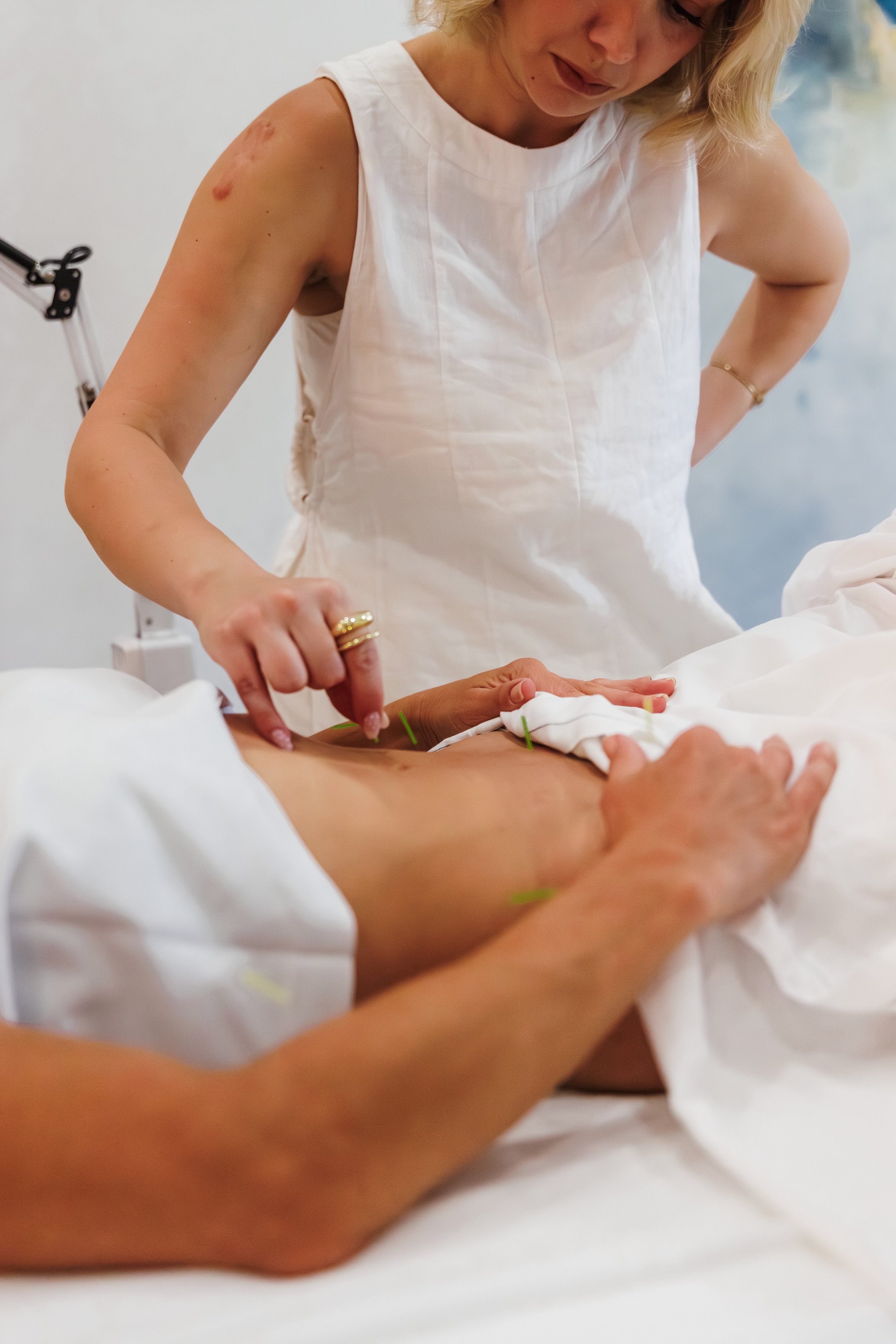
Needling: thin needles placed at selected points, usually left in place for a set time while you rest.
Related methods: some visits include cupping or other techniques, based on your needs and consent.
Plan: a suggested schedule and what to monitor.
Many people describe the experience as calm. Sensations vary, and you can always ask your practitioner to adjust or stop.
What does Chinese Medicine look at that conventional care often does not?
TCM pays close attention to patterns that conventional visits may not have time to explore. These include how you digest food, how you sleep, how your energy moves through the day, and how stress shows up in your body.
For many people, that conversation is valuable in itself. It can reveal links between symptoms, such as stress and digestion, that deserve a closer look with testing.
At an integrative clinic, these observations are one input among several. Your Doctors may combine them with lab work and a conventional exam, so decisions rest on more than one source of information.
TCM theory uses its own language, and you do not need to adopt it to benefit from a thoughtful assessment. A good practitioner explains terms in plain English.
What key terms should you know?
Qi: a traditional concept describing vital energy, used in TCM theory.
Meridian: a traditional pathway along which acupuncture points are located.
Sham acupuncture: a placebo procedure used in research for comparison.
Botanical Medicine: the use of plant-based products, guided by a trained practitioner.
You do not need to accept TCM theory to benefit from a careful assessment. Ask your practitioner to explain their reasoning in plain language, and what research exists for your concern.
Free guide: Stress and sleep patterns often show up together. Download our free Nervous System Guide to learn how they connect. [Nervous System Guide]
When to see a Doctor
Seek medical care promptly, rather than relying on acupuncture, for:
Chest pain, trouble breathing, or sudden weakness
Severe or sudden headache, or new numbness
Fever, signs of infection, or unexplained swelling
Thoughts of harming yourself. Call or text the 988 Suicide & Crisis Lifeline, or call 911 in an emergency.
NCCIH advises against using acupuncture to delay seeing a health care provider about a health problem.
How we approach this at Saffron & Sage
At Saffron & Sage, your path begins with a consultation, then assessment, then a Doctor-supervised plan. Acupuncture can be one part of that plan, alongside testing and other approaches.
Our Doctors of Acupuncture and Chinese Medicine are licensed, and our Medical Director provides oversight across the clinic. Explore our Acupuncture page or read about Dr. McFarlane.
What we see in clinic: People are often surprised that the first visit is mostly a conversation. The details they share, like sleep, digestion, and stress, guide what we do next.
FAQs
Does acupuncture hurt?
Most people feel little to mild sensation, such as pressure, warmth, or a dull ache, since the needles are very thin. Sensations vary by person and point. Tell your practitioner if anything feels uncomfortable, and they can adjust right away.
How many sessions will I need?
It depends on your concern, history, and goals. Your practitioner will suggest a schedule after assessment and review progress along the way. Results vary, and your Doctor will tell you honestly if something is not working.
Is acupuncture the same as Traditional Chinese Medicine?
No. Acupuncture is one practice within Traditional Chinese Medicine. TCM also includes herbal medicine, movement such as tai chi, and dietary guidance, assessed through its own diagnostic methods.
Can I combine acupuncture with conventional care?
Yes, and many people do. NCCIH advises telling all your health care providers about any complementary approach you use. At Saffron & Sage, your Doctors coordinate so your plan fits together.
Sources
About the author
Dr. Scott McFarlane is a Doctor of Acupuncture and Chinese Medicine, licensed acupuncturist, and certified massage therapist, and serves as Director of Clinical Excellence at Saffron & Sage in San Diego. Read the full bio.