
Why Exhausted Employees Struggle to Innovate
Author: Abigail Riley, Head of Corporate Wellness
Innovation is often viewed as the product of strategy, talent, technology, and organizational culture.
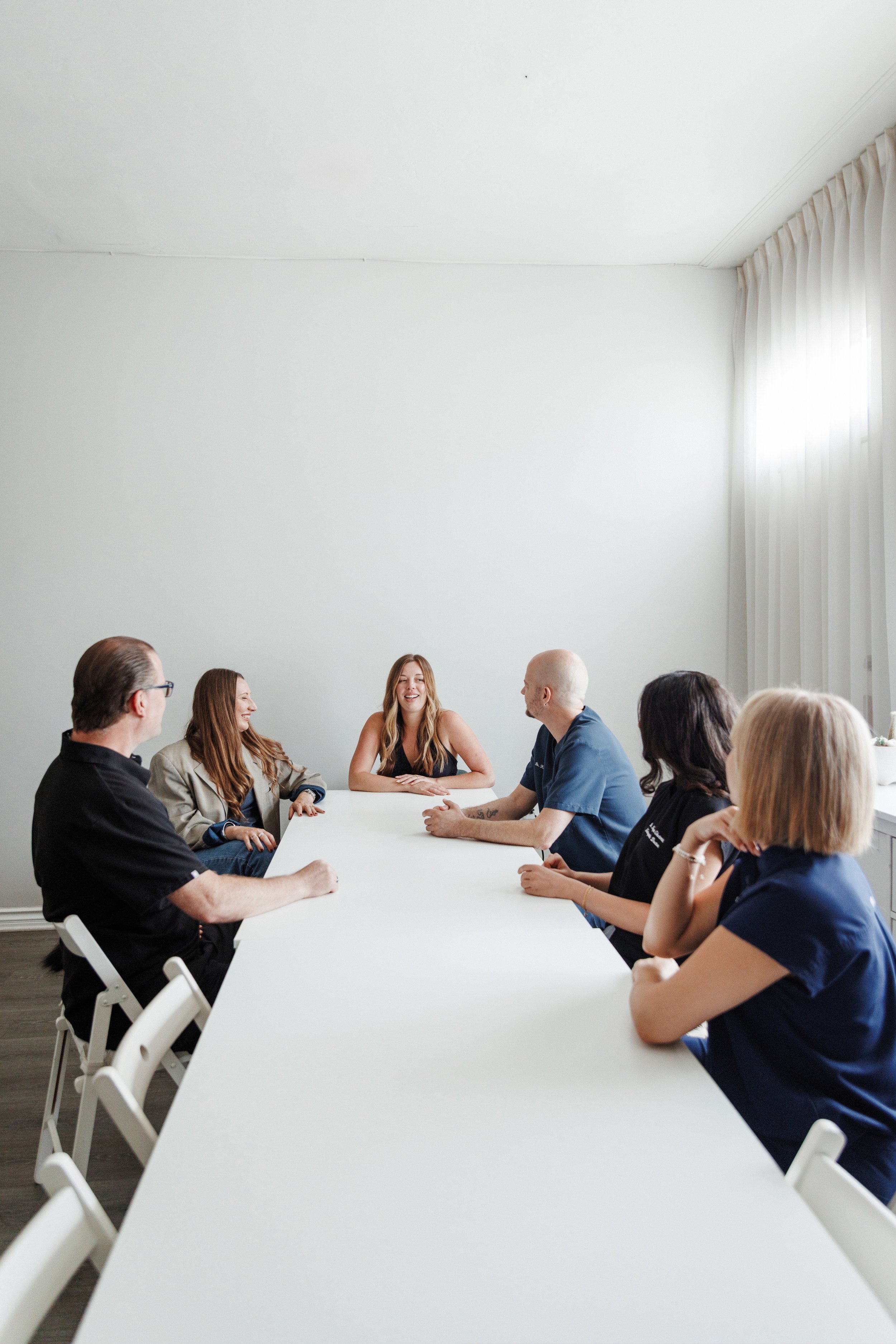
Companies invest heavily in leadership development, artificial intelligence, training programs, collaboration tools, and innovation initiatives in pursuit of competitive advantage.
Yet one of the most important drivers of innovation is frequently overlooked.
Human energy.
Employees cannot consistently solve complex problems, generate new ideas, think creatively, or adapt to change when they are operating in a state of chronic fatigue.
At Saffron & Sage, we believe corporate wellness and workplace wellness programs should be viewed as strategic investments in human performance. Innovation depends on people, and people perform best when their physical health, mental wellbeing, resilience, and recovery are supported.
As organizations continue searching for ways to improve creativity and innovation, many may be overlooking one of the most significant barriers standing in their way: an exhausted workforce.
Innovation Requires More Than Intelligence
Innovation is often associated with expertise and technical knowledge.
While these qualities matter, innovation also requires cognitive resources that are directly influenced by health.
Creative thinking depends on mental flexibility, focus, emotional resilience, curiosity, and the ability to connect ideas in new ways. These functions rely on a brain that has adequate energy and recovery.
When employees are fatigued, cognitive resources become increasingly limited. Rather than exploring possibilities and generating solutions, the brain often prioritizes efficiency and short-term problem solving.
This shift can significantly affect an organization's capacity for innovation.
The challenge is not that employees stop working.
The challenge is that they often continue working while operating below their full cognitive potential.
Chronic Stress Changes How People Think
Many organizations operate in environments where high stress has become normalized.
Tight deadlines, constant communication, staffing shortages, economic uncertainty, and increasing workloads have created workplaces where chronic stress is often viewed as unavoidable.
The body responds to stress by prioritizing survival and immediate demands.
In the short term, this response can be helpful.
Over time, however, chronic stress can affect attention, memory, decision-making, emotional regulation, and cognitive flexibility.
Research has demonstrated that prolonged stress may impair executive function and reduce the brain's ability to engage in higher-level thinking processes associated with creativity and innovation (Stress Effects on the Brain: Pathophysiology and Protective Factors).
When employees are focused primarily on managing stress, fewer resources remain available for creative thinking and innovation.
Fatigue Pushes People Into Survival Mode
Innovation requires mental space.
Fatigue removes that space.
When employees are physically or mentally exhausted, they often become more focused on completing immediate responsibilities than exploring new possibilities. Their goal shifts from creating better solutions to simply getting through the day.
This is not a reflection of motivation or commitment.
It is a reflection of physiology.
The brain consumes a significant amount of the body's energy resources. When recovery is inadequate, mental performance often suffers.
Employees experiencing fatigue may find it more difficult to:
Generate new ideas
Solve complex problems
Adapt to changing circumstances
Think strategically
Collaborate effectively
Organizations frequently interpret these challenges as engagement or performance issues when the underlying problem may be exhaustion.
Sleep Is an Innovation Strategy
Sleep is rarely discussed in conversations about business performance.
It should be.
Sleep supports learning, memory consolidation, emotional regulation, decision-making, and cognitive performance. It is also one of the primary ways the brain recovers from daily demands.
Research consistently demonstrates that insufficient sleep negatively affects creativity, problem-solving abilities, attention, and workplace performance (Sleep and Human Performance).
Yet many workplace cultures continue to reward behaviors that compromise recovery.
Long hours.
Constant availability.
Late-night communication.
Early-morning meetings.
While these practices may appear productive in the short term, they can undermine the cognitive capacity required for innovation over time.
Organizations that want more innovative teams should consider whether their culture supports recovery as much as productivity.
Burnout and Innovation Cannot Coexist
Burnout is often discussed as an employee wellbeing issue.
It is also a business performance issue.
Individuals experiencing burnout frequently report emotional exhaustion, reduced motivation, diminished creativity, and lower engagement. These outcomes directly affect an organization's ability to innovate.
Innovation requires employees who are curious, engaged, adaptable, and capable of sustained focus.
Burnout produces the opposite effect.
This is one reason forward-thinking organizations are increasingly investing in workplace wellness initiatives that address stress resilience, recovery, and long-term wellbeing.
Supporting employee health is not separate from supporting business growth.
The two are closely connected.
Why Workplace Wellness Is Becoming a Competitive Advantage
Organizations often focus on innovation through external investments.
New technologies.
New systems.
New processes.
New strategies.
While these investments are valuable, innovation ultimately depends on the people responsible for using them.
A workforce experiencing chronic stress and fatigue may struggle to fully leverage even the most advanced tools and resources.
Corporate wellness programs that support sleep quality, stress management, physical health, and resilience can help create conditions where employees are better equipped to think creatively and perform at a higher level.
Research from the World Health Organization continues to highlight the impact of workplace stress on employee wellbeing, productivity, and organizational outcomes (Burn-out an Occupational Phenomenon).
The organizations that prioritize workforce wellbeing may gain advantages that extend beyond retention and engagement.
They may also strengthen their capacity for innovation.
The Link Between Leadership and Employee Energy
Leadership plays a significant role in shaping workplace culture.
When leaders model chronic overwork and constant availability, employees often follow those expectations.
Over time, this can create environments where exhaustion becomes normalized.
Conversely, organizations that encourage recovery, healthy boundaries, and sustainable performance often create conditions where employees can maintain higher levels of energy and resilience.
Innovation thrives in environments where people have the capacity to think beyond immediate demands.
That capacity is heavily influenced by workplace culture.
Sustainable Innovation Requires Sustainable Performance
Many organizations pursue innovation while simultaneously creating conditions that undermine it.
They expect employees to be creative while exhausted.
Strategic while overwhelmed.
Collaborative while burned out.
Adaptable while mentally depleted.
These expectations are difficult to sustain.
The future of workplace wellness is not simply about helping employees feel better.
It is about helping people perform better.
Sustainable innovation requires sustainable performance, and sustainable performance requires recovery, resilience, and wellbeing.
Organizations that understand this relationship may be better positioned to navigate change, solve complex problems, and maintain long-term competitive advantages.
Innovation Begins With Human Energy
Innovation is often viewed through the lens of technology, strategy, and talent.
Yet beneath each of these factors is something more fundamental.
Human capacity.
Employees who are chronically stressed, fatigued, and burned out may struggle to access the creativity, adaptability, and problem-solving abilities that innovation requires.
Organizations seeking greater innovation should consider not only the systems they invest in, but also the wellbeing of the people responsible for driving results.
Because exhausted employees may continue working.
But they are unlikely to innovate at their highest level.
Supporting Innovation Through Wellbeing
At Saffron & Sage, we help organizations build healthier, more resilient workforces through comprehensive corporate wellness and workplace wellness programs designed to support recovery, stress resilience, cognitive performance, and long-term wellbeing.
Our approach goes beyond traditional wellness initiatives by addressing the underlying factors that influence energy, focus, creativity, and sustainable performance. Through personalized assessments, holistic healthcare services, educational programming, and proactive wellbeing strategies, we help organizations support the people who drive innovation and growth.
Because when employees have the energy to think clearly, adapt effectively, and recover consistently, innovation becomes more than a business goal. It becomes a sustainable outcome.
To learn more about Saffron & Sage Corporate Wellness programs, call us 619-933-2340 and discover how investing in workforce wellbeing can help unlock the full potential of your organization.
Disclaimer: This content is for educational and informational purposes only and does not constitute medical advice, diagnosis, or treatment. Always consult a qualified healthcare provider before making health decisions. Medical services are provided by Kasawa Medical APC, doing business as Saffron and Sage MD, an independent California medical practice. Non medical wellness services are provided by Saffron and Sage LLC, doing business as Saffron & Sage.