
Fire Cupping: What It Actually Does to Your Body — Circulation, Recovery & Performance Explained
Author: Dr. Scott McFarlane, Clinic Director, Doctor of Acupuncture & Chinese Medicine
Fire cupping has moved from a traditional therapy into mainstream visibility, often recognized by the circular marks seen on athletes and high performing individuals. Despite its growing popularity, it remains widely misunderstood.
For individuals operating at a high level, whether in athletics, leadership, or demanding professional environments, fire cupping is not simply a recovery trend. It is a clinically relevant tool that works at the level of circulation, connective tissue, and metabolic clearance.
Understanding the physiology behind it allows for more informed use within a broader performance and longevity strategy.
What Is Fire Cupping?
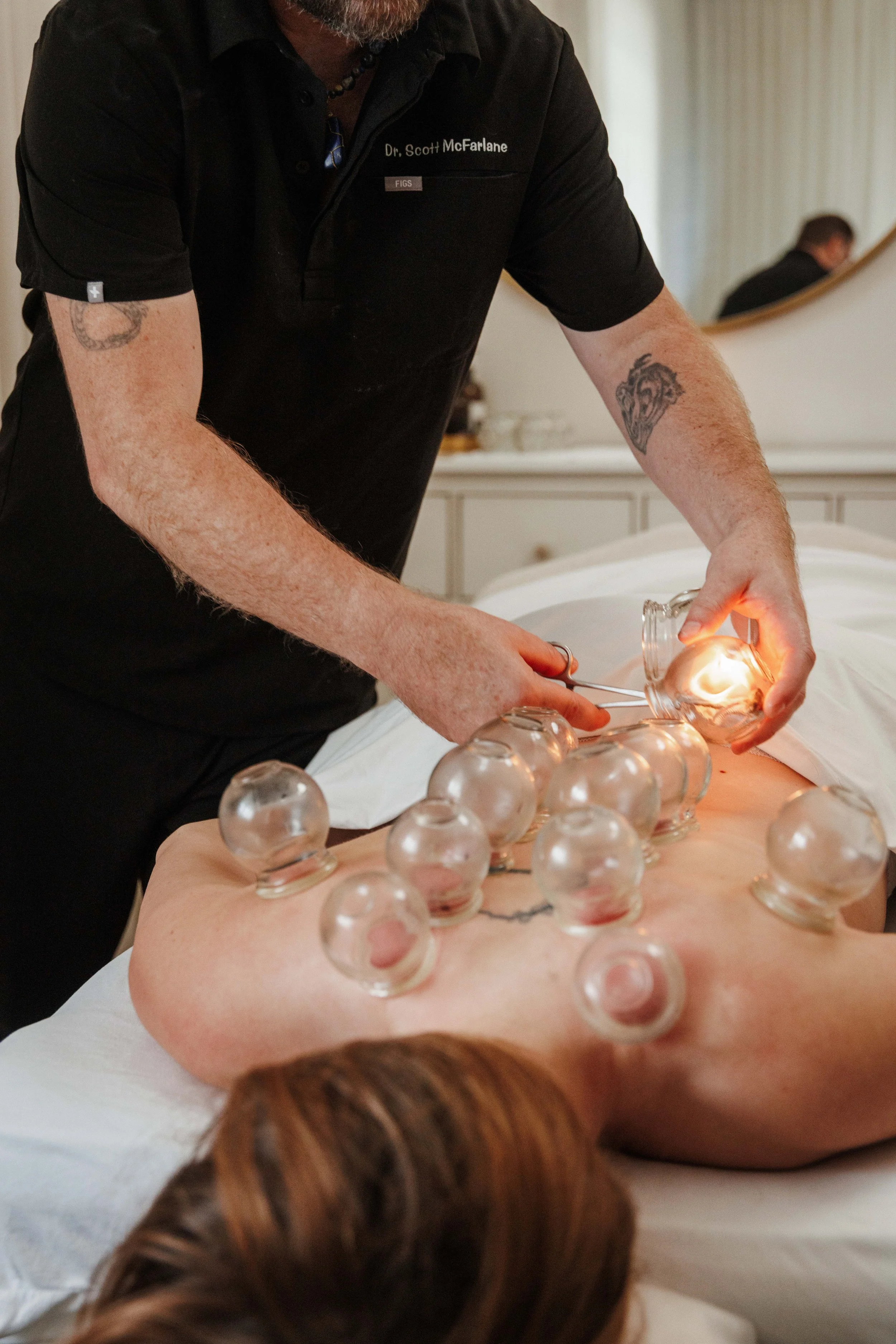
Fire cupping is a form of cupping therapy that uses heat to create suction within a glass cup before placing it on the skin. As the air cools, a vacuum forms, drawing the skin and underlying tissue upward into the cup.
Unlike most manual therapies that apply downward pressure, cupping works through decompression. This distinction is clinically important. By lifting tissue rather than compressing it, cupping influences deeper structures including fascia, capillaries, and muscle layers in a way that complements other therapeutic approaches.
The Physiology: What Fire Cupping Is Actually Doing
To understand why fire cupping works, it helps to understand what's happening in the tissue before, during, and after a session.
Fascial Decompression and Tissue Mobility
Fascia is the connective tissue network that surrounds muscles and organs. In healthy tissue, it remains hydrated and mobile. Under chronic stress, repetitive movement, or insufficient recovery, fascia can become restricted and less pliable.
The suction created by cupping lifts the fascial layer away from underlying muscle, creating space within the tissue. This mechanical decompression supports improved hydration, reduces adhesions, and allows for better movement between tissue layers.
For individuals with consistent training routines or repetitive movement patterns, this can be a limiting factor in both performance and recovery.
Circulation and Capillary Bed Dynamics
At the level of the smallest blood vessels, circulation efficiency is critical. In areas of chronic tension or restricted movement, blood flow can become sluggish.
Fire cupping draws blood toward the surface and into the area of suction, supporting the clearance of stagnant blood within the capillary bed.
The visible marks associated with cupping reflect this process. They represent the movement of older, less oxygenated blood to the surface rather than tissue damage.
This improved circulation allows for more efficient delivery of oxygen and nutrients to the tissue.
Metabolic Waste Clearance
Muscle activity produces metabolic byproducts, including lactic acid and other compounds that contribute to soreness and fatigue when not efficiently cleared.
Circulation is the primary mechanism for removing these byproducts. By increasing local blood flow, cupping supports more efficient clearance of metabolic waste and facilitates recovery.
This is one reason many individuals report reduced soreness and improved recovery following treatment.
Improved Muscle Quality and Performance
The combined effects of improved circulation, reduced fascial restriction, and enhanced metabolic clearance influence overall muscle function.
Muscle tissue that is well perfused and free of restriction tends to demonstrate improved endurance, better movement quality, and reduced injury risk.
For individuals with high physical demand, this difference is meaningful over time.
Why High Performers May Benefit the Most
A common clinical observation is that individuals with the most disciplined routines often develop hidden areas of restriction.
Consistent, repetitive movement patterns place similar demands on the same tissues repeatedly. Even when those routines are well structured, they can create localized areas of overuse and under recovery.
Over time, this may lead to:
Fascial restriction in specific muscle groups
Circulatory inefficiencies in repeatedly stressed tissue
Accumulation of metabolic byproducts
Compensation patterns that are not immediately noticeable
These patterns often develop beneath the surface before symptoms appear.
Fire cupping provides both therapeutic and diagnostic value by revealing where tissue is holding stress. The pattern and intensity of marks can reflect areas of reduced circulation or increased restriction.
This allows for early intervention before dysfunction progresses into pain or injury.
What to Expect From a Fire Cupping Session
For those new to cupping, knowing what to expect helps make the experience more comfortable and the results more meaningful.
Before the Session
Your practitioner will review your health history, physical activity patterns, and areas of concern. Hydration is encouraged, and intense training immediately prior to the session is generally avoided.
During the Session
Cups are placed on targeted areas, commonly along the back, shoulders, or posterior chain. The sensation is typically described as firm suction and pulling. Most individuals do not experience pain and often report a sense of relaxation.
Sessions generally last between twenty and forty five minutes depending on the clinical objective.
After the Session
Marks may remain for several days. Their intensity often reflects the degree of circulatory stagnation in the tissue. With consistent treatment, marks typically become lighter and resolve more quickly as tissue health improves.
Hydration following treatment supports metabolic clearance and recovery.
Frequency and Clinical Application
For general recovery and maintenance, sessions are often performed on a monthly or bi monthly basis.
For individuals addressing specific concerns or preparing for periods of increased demand, frequency may increase based on practitioner assessment.
Cupping is most effective when integrated into a broader care plan that includes movement, nutrition, and nervous system regulation.
Fire Cupping as Part of a Systems Based Approach
At Saffron and Sage, fire cupping is not viewed in isolation. It is part of a comprehensive model of care that considers the full physiological context.
This includes:
Musculoskeletal patterns and movement quality
Circulatory efficiency
Nervous system regulation
Metabolic and inflammatory status
Performance goals and recovery demands
By integrating cupping with other modalities such as acupuncture, breathwork, and functional medicine, we support both immediate relief and long term resilience.
Fire cupping is available as a standalone service and as part of our broader wellness membership and corporate wellness programs.
Frequently Asked Questions
What does fire cupping do?
Fire cupping uses heat-created suction to decompress the fascia, improve local circulation, and draw stagnant blood, lactic acid, and metabolic waste out of congested tissue. By improving blood flow to the targeted area, it supports muscle recovery, reduces soreness, improves tissue quality, and can help identify areas of hidden restriction or deficiency before they develop into injury or performance problems.
Does fire cupping hurt?
Most people describe fire cupping as an unusual but not painful sensation, a feeling of strong suction and pulling on the skin. The experience is often deeply relaxing. Some sensitivity is normal in areas that are particularly congested or restricted, but sharp or intense pain is not typical and should be communicated to your practitioner immediately.
What are the marks from fire cupping?
The circular marks left by fire cupping are caused by stagnant blood being drawn out of the capillary bed to the surface of the skin. They are not bruises; no blunt force has been applied and no tissue has been damaged. The marks reflect the degree of circulatory stagnation in that area of tissue. Darker marks indicate more accumulated waste. As sessions continue and tissue circulation improves, marks typically become lighter and fade more quickly.
How long do cupping marks last?
Cupping marks typically last anywhere from a few hours to about ten days, depending on the individual, the area of the body, and the degree of stagnation present. Areas with more accumulated metabolic waste tend to mark more darkly and take longer to clear. With regular sessions, most people notice their marks becoming lighter and fading faster over time.
Is fire cupping good for athletes?
Yes, fire cupping is particularly well-suited for athletes and people with demanding physical routines. It supports faster recovery by clearing lactic acid and metabolic waste, improves muscle quality and circulation over time, and helps identify areas of restriction or deficiency that repetitive training patterns tend to create. Many elite athletes include regular cupping in their recovery protocols for precisely these reasons.
How is fire cupping different from regular cupping?
Fire cupping specifically uses a flame to create the vacuum inside the cup before placement, making it one of the more traditional forms of cupping therapy. Other cupping methods use mechanical or manual suction to achieve the same vacuum effect. The physiological mechanisms are largely the same across cupping modalities; the primary differences are in the technique used to create suction, the cup material, and the specific application. Your practitioner can advise which approach is best suited to your needs.
How do I book a fire cupping session at Saffron Sage Living?
You can book a fire cupping session through our website at saffronsageliving.com or by reaching out to our team directly. We offer fire cupping as a standalone service, as part of our individual wellness memberships, and within our corporate wellness programs. If you're unsure whether cupping is the right fit for you, book a free consultation, and we'll help you figure it out.
A Clinical Perspective on Performance and Recovery
Fire cupping provides a unique combination of decompression, circulation enhancement, and tissue level insight.
For high performing individuals, the goal is not simply symptom relief. It is maintaining tissue quality, preventing breakdown, and supporting consistent output over time.
When used appropriately, cupping becomes a tool for both recovery and early detection of physiological strain.
The Saffron and Sage Approach
At Saffron and Sage, fire cupping is delivered within a clinical framework designed for individuals who prioritize performance, longevity, and whole body health.
Our practitioners evaluate not only where tension exists, but why it is developing. This allows for a more precise and effective approach to care.
If you are looking to support recovery, improve tissue health, or better understand how your body is adapting to demand, our team is here to guide you.
Book your session at saffronsageliving.com, and contact us at 619-933-2340, and let's figure out what fits your team.
Disclaimer: This content is for educational and informational purposes only and does not constitute medical advice, diagnosis, or treatment. Always consult a qualified healthcare provider before making health decisions. Medical services are provided by Kasawa Medical APC, doing business as Saffron and Sage MD, an independent California medical practice. Non medical wellness services are provided by Saffron and Sage LLC, doing business as Saffron and Sage.